Canggu, Bali: Surf, Cafes and Where the Rice Fields Meet the Beach
A week in the south Bali surf town that became the unofficial capital of the digital-nomad world.
📍 Canggu, Bali, Indonesia
Ten years ago, Canggu was a stretch of dark-sand beaches and rice paddies on the south-west coast of Bali, twenty minutes north of Seminyak, with three or four warungs, two surf schools, and a single dirt road that turned to mud whenever it rained. Today it is the closest thing in South-East Asia to a small city built around surfing, cafes, and the laptop. The dirt road is paved (in places). The warungs are still there, alongside two hundred new cafes. The rice paddies are still here, although a few have been replaced by villas. And the surf is, on a good day, exactly as good as it was a decade ago. If you understand what Canggu is — a surfer’s village that has become a digital-nomad hub without entirely losing the surfer’s village — you will love it. If you arrive expecting Ubud temple vibes, you will be confused.
I had a week. A week is the right length. Three days is too rushed; ten is starting to feel slow.

The setup
Canggu is loosely organised around three areas: Berawa in the south (closest to Seminyak, glossier, more beach clubs), the village centre around Batu Bolong (the surf school heart, the cafe heart, the closest thing to a high street), and Pererenan in the north (the quietest, the most rice-fields-still-visible). The whole area is about three kilometres end-to-end. You will rent a scooter. The scooter is non-negotiable.
If you have not ridden a scooter before, please learn here, slowly, off the main roads, before you join the traffic. The Canggu shortcuts — including the famous one-way bridge between Batu Bolong and Pererenan — are part of the local pulse, and they don’t forgive nervous riders.
Day one and two: surf school
If you can surf, find your local. If you can’t — and most of us can’t — go to surf school. Canggu has dozens of operators, and the standard is high. Group lessons run about $35 for two hours including board and rashguard; private lessons about $60. Pererenan Surf School, Endemic Surf School, and a handful of others have been running for years.

I had two lessons. The first instructor, Komang, was patient with me in a way that suggests he has watched a thousand pasty Australians embarrass themselves in the same waves. The waves at Old Man’s — the famous beginner break in front of the Batu Bolong cafes — are gentle, frequent, and forgiving. By the end of two hours I had stood up four times and ridden two waves to the beach, and I was, briefly, the most pleased a person can be while soaking wet and sand-coated. The lesson ends with a coconut on the beach. The coconut is not optional.
After your second lesson, hire a board for the rest of the week ($5 a day) and just go out. The surf community in Canggu is famously welcoming to beginners as long as you respect the line-up etiquette: don’t drop in, don’t paddle past someone with priority, and smile.
Day three: the cafe day
Canggu’s cafe culture is now world-class, partly because so many of the people running cafes here have come out of cities like Sydney, Melbourne, Berlin and Cape Town with experience. The result is breakfast and brunch as good as anywhere in Asia. Crate Cafe is the Canggu institution — long communal tables, queues out the door, serious specialty coffee, eggs that arrive on a wooden board with avocado and dukkah. Milu by Nook, on the rice-paddy side of Berawa, is more sit-down. Nude is a beautiful, plant-filled, two-storey hangout you can spend hours in. The Shady Shack is vegan. Cafe Vida is consistently good.

Spend a whole day floating between three of them with a book and a laptop if you want. This is the Canggu pattern. Don’t fight it.
Day four: rice fields and a slower morning
Wake up at 5:30 a.m. on day four and walk into the rice paddies behind your villa. Canggu still has working rice fields scattered between the villas, and at sunrise they are utterly empty, the air is cool, and the herons stand in the irrigation ditches looking elegant and slightly grumpy. The Subak Sembung walk near Pererenan is a good loop. So is the path that runs north from the Batu Bolong temple along the river to the next village. The maps apps don’t always know these — ask a local at your guesthouse to draw you a route.

Spend the rest of the morning at one of the open-air yoga shalas — Samadi, The Practice, or Serenity — for a class. Have a juice. Have a long lunch. This is the slow day.
Day five: a beach club and a sunset surf
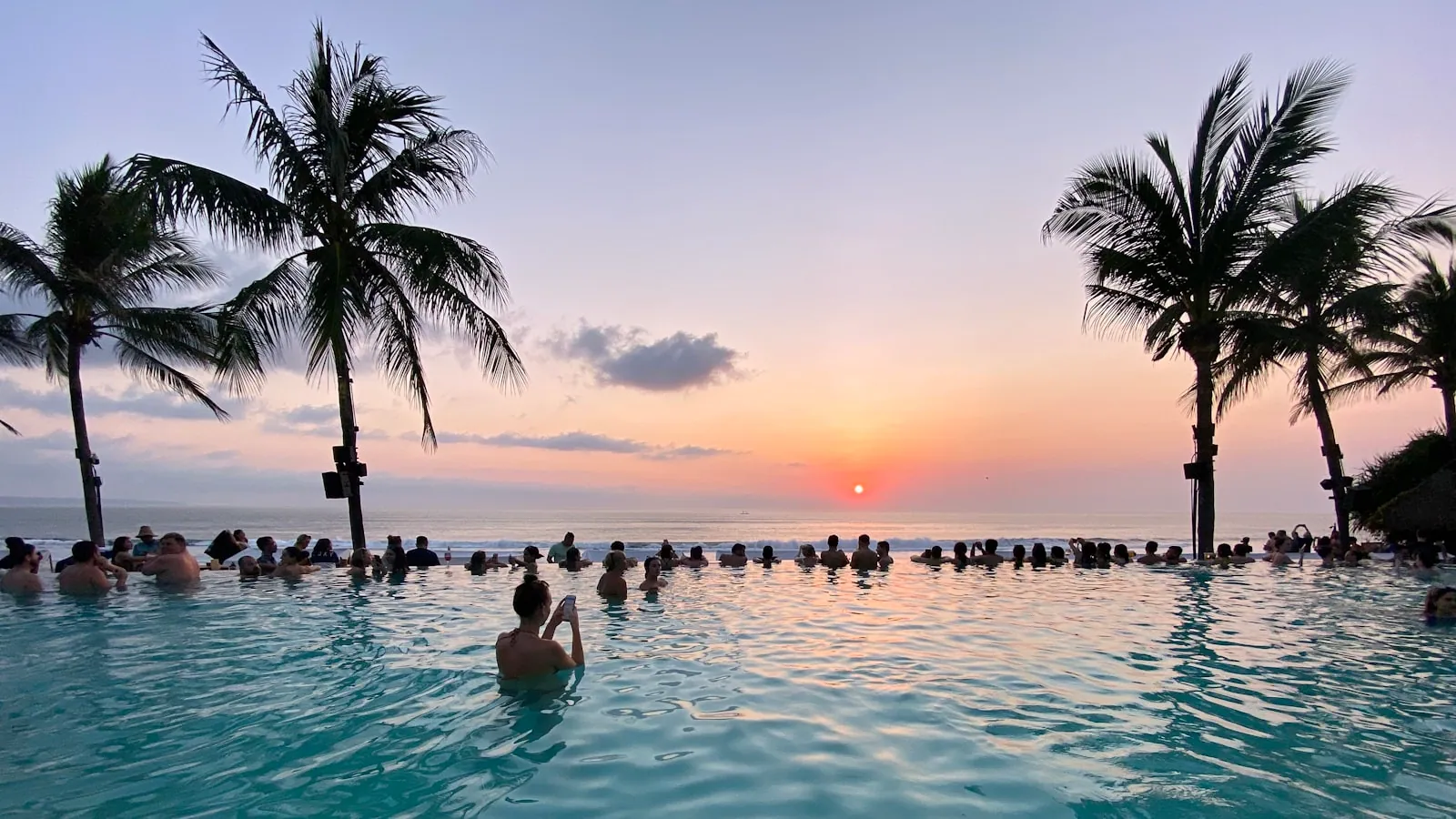
You will, eventually, do a beach club afternoon. Finns Beach Club is the biggest — a multi-level pool complex with several restaurants, sun loungers in rows, DJs, three swim-up bars and a kid pool. Day passes around $30. It’s loud, it’s commercial, and on a hot afternoon it is a lot of fun. La Brisa, on the next stretch of sand at Echo Beach, is calmer — a converted warehouse turned restaurant and beach club, with shaded tables on the sand and a more grown-up menu. Old Man’s, just next door, is the surfer’s pub-with-burgers-and-Bintang version. Pick whichever fits your mood.
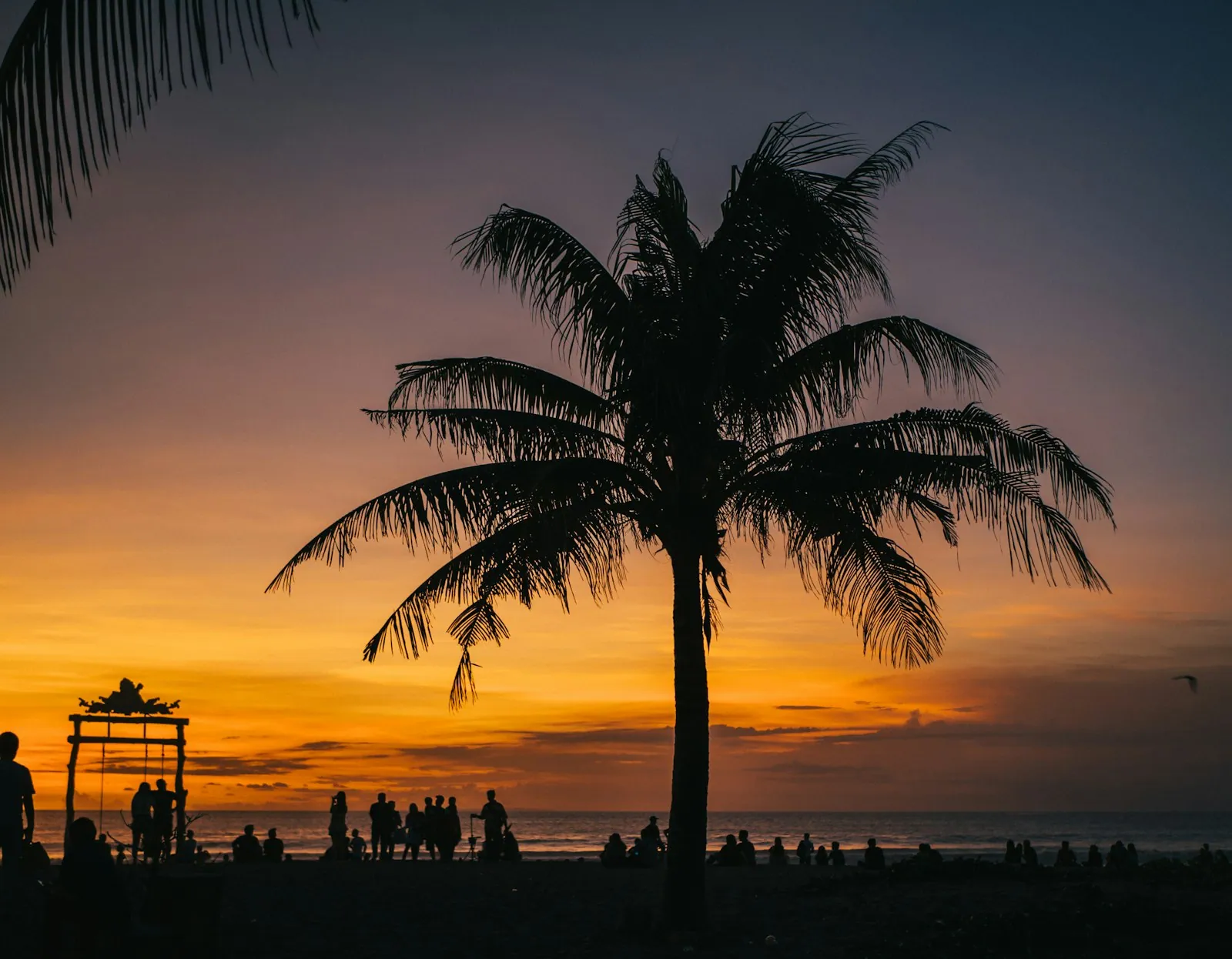
End the afternoon with a sunset surf at Old Man’s. The light goes gold, then pink, then deep orange. The wave count drops as the surfers come in for happy hour. You float in the line-up watching the light fall and forget, for a minute, what city you came from.
Day six: a day trip — Tanah Lot or Mount Batur
If you want a day off the laptop and the beach, hire a driver. Tanah Lot temple is forty minutes north and worth the visit at sunset (or the much-quieter sunrise). Mount Batur, two hours north-east, can be done as a sunrise hike — wake at 2 a.m., car to the trailhead, two-hour climb in the dark with a guide and a head torch, sunrise on the summit at 6, breakfast cooked in volcanic steam, drive back to Canggu by lunchtime. It is exhausting and it is genuinely brilliant. If you do it, make sure your guide is one of the licensed Mt Batur Trekking Guides — non-locals are no longer permitted to lead the climb.
Day seven: the final morning
Last surf, last brunch, last massage. Pack. Go.
How nice are people in Canggu?
The mix of Balinese hosts, expat business owners, and long-stay travellers makes Canggu feel like a small international village. The Balinese hospitality is, again, baseline excellent: my homestay owner, Made, drove me to a doctor when I cut my foot on coral, refused payment, and insisted on bringing me a bowl of soup the next day. The expat community is unusually open — more than once at a cafe, someone asked if they could share my table and ended up giving me a recommendation list for the rest of the week. The instructors at the surf schools, the staff at Crate, the masseuse at the spa — all consistently lovely. Canggu manages, somehow, to keep the small-town warmth despite being a globally-connected place.
If you go
• Rent a scooter only if you’re comfortable. Otherwise use Grab or hire a driver. The traffic is real. • Wear a helmet. Always. The local police will fine you, and the road is unforgiving. • Carry small cash. Many warungs and small spas don’t take cards. • Book your villa on the rice-paddy side if you want quiet, or beach-side if you want walking distance to the surf. • Don’t skip the sunrise rice-field walk. It’s the antidote to the cafe-and-beach-club routine and it’s free.
Canggu is, depending on your mood, the most overrated or the most underrated bit of Bali. I think it’s the most honest: a beach town that is both surfer-village and digital-nomad city, both warung-cheap and beach-club-expensive, both rice-paddy and concrete, all at once. Stay a week. You’ll know whether you’re a Canggu person by day three. If you are, you’ll come back for a month next year.
Plan your trip to Indonesia
For more, see our Indonesia travel guide and country page, places to visit in Indonesia on BugBitten, tours and experiences in Indonesia.
Useful external resources: the Indonesia country profile on Wikipedia and the official Indonesia tourism site.