Tegallalang Rice Terraces: The Bali Photograph Everyone Wants
A morning at Ubud’s most famous landscape, plus the smaller terraces no one talks about.
📍 Tegallalang, Ubud, Bali, Indonesia
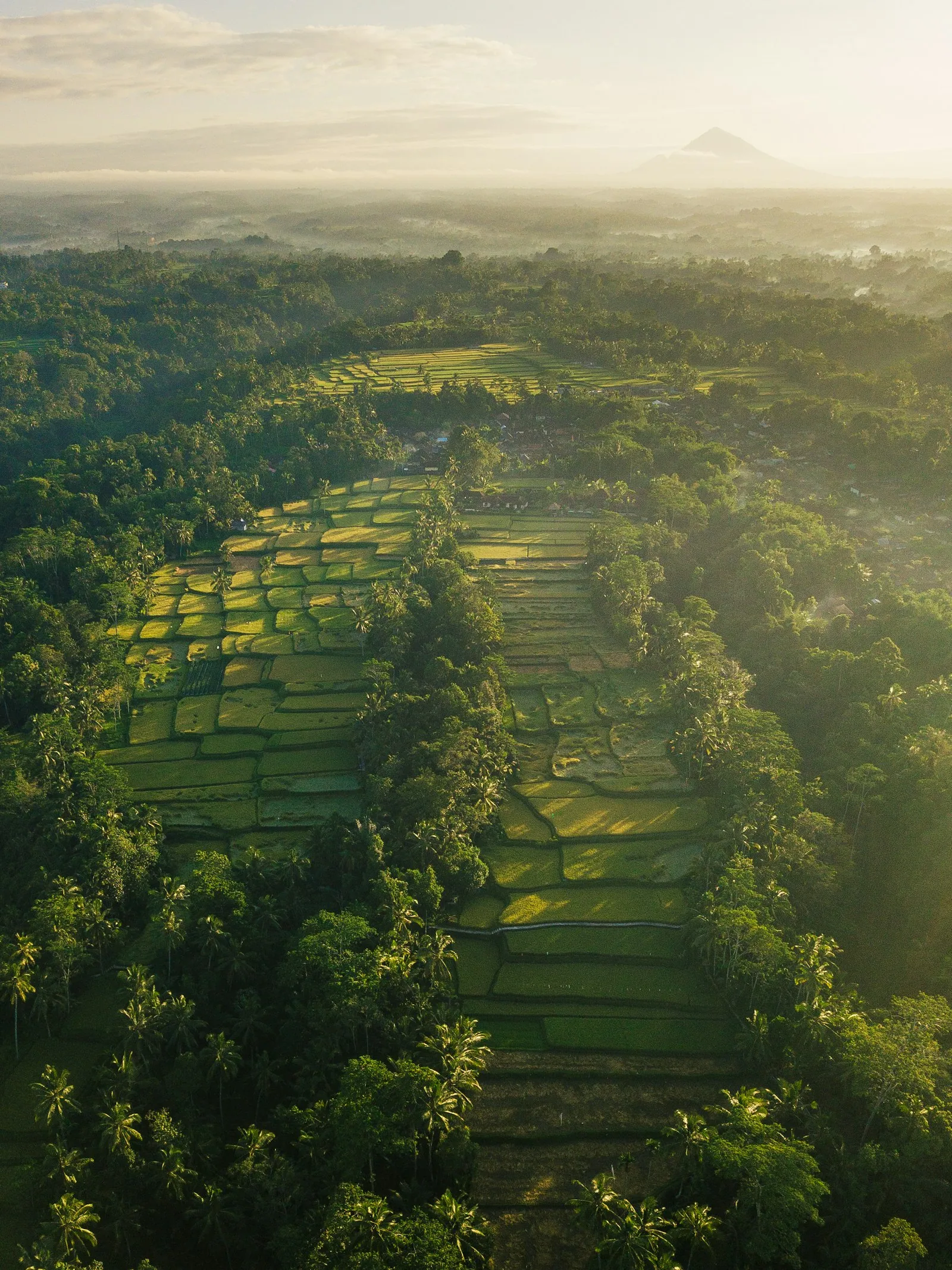
Of the dozens of rice-terrace landscapes in Bali, Tegallalang has become the famous one — the photograph that ends up on every Bali blog, every Instagram travel reel, every airline magazine spread. Layered emerald-green terraces stepping down a steep valley, palm trees punctuating the ridges, mist sometimes hanging in the lower paddies in the early morning. It’s twenty minutes north of Ubud and the bus tours arrive in waves from 9:30 a.m. onwards, so the secret to enjoying Tegallalang is simple: get there before they do.
I want to write this one as a how-to rather than a story, because that’s what most people need from a Tegallalang post. How early to go. What to expect. What to skip. What to add.
Getting there
Tegallalang is on the road from Ubud to Kintamani, about 20 minutes by car or scooter from the centre of Ubud. Ride a scooter if you’re comfortable on Balinese roads — the route is straightforward and easy. Hire a driver if you’re not — about $30 for a half-day return trip, which gives you flexibility for a coffee stop on the way back.
Pay the small entrance fee at the lot. It’s normally around 25,000 IDR (about $2). Then walk down to the lookout deck — five minutes from the car park.
The view
The first time you stand at the railing and look out, the photograph makes sense. The valley in front of you drops in dozens of stepped terraces, each one a perfect curve following the contour of the hillside, planted with rice in different stages: some bright green and ankle-deep, some deep gold and ready to harvest, some flooded mirrors after a recent flooding cycle. The light is different on each terrace. The whole valley feels like a giant landscape architect’s scale model, except it’s real, and it’s 1,200 years old in design, and the farmers who maintain it use the same Subak water-sharing system that Bali has used since the 9th century.

That detail — the Subak system — is one of the things to take away. The Subak is a co-operative water management system, recognised by UNESCO, by which the rice farmers of Bali have shared and rotated the irrigation water of the rivers and streams of the island for over a thousand years. Each Subak group has its own temple, its own decision-making body, and its own scheduling of when which paddy gets which water. The Tegallalang terraces are a working example of this. The farmers you see in the paddies aren’t actors. They’re working their cooperative’s rotation.
What to do
You can do the whole Tegallalang experience in three different ways:
The lookout: free or near-free, the photograph from the deck, ten minutes, you leave.
The walk: pay the entrance, descend into the valley, walk through the terraces themselves on small farmers’ paths, accept that several farmers along the route will ask for a small donation for crossing their land (usually around 10,000 IDR each — fair, this is their land and their work). Allow about an hour. The walk takes you across the bottom of the valley, up the other side, and back along the rim. It is the proper way to see Tegallalang.

The swing: along the western ridge are several swing operators, each running a giant rope swing that launches you out over the valley. Cost is around $20–35 depending on the operator and how many photos they include. It is the most touristy thing in central Bali. It is also fun, photogenic, and harmless. If you want the big swing photograph, do it. If you don’t, skip it.
When to go
Be at the lookout by 7:30 a.m. for the best light and almost no other tourists. The big buses arrive after 9:30. By 10:30 the lookout is shoulder-to-shoulder. By noon it’s a queue. The light on the terraces is best at sunrise and sunset; midday flattens them.
I went on a Tuesday at 7:15 a.m. The car park had three other cars in it. The lookout had two other people on it. I walked the loop in 75 minutes and met three farmers, two of whom posed for photographs (they will, gently, ask for a small tip — about $2 each is the right amount), and one of whom asked me to take a photo of him with his rice. I was back at my coffee shop in Ubud by 9 a.m.
The other rice terraces no one tells you about
If Tegallalang has become too crowded for you, or if you want to add a quieter terrace to the day, two recommendations.

Jatiluwih, in the central highlands about ninety minutes from Ubud, is the largest UNESCO-recognised rice terrace area in Bali — a rolling expanse of paddies that stretches across hillsides as far as you can see. It’s less photogenic than Tegallalang because it’s broader and flatter, but it’s much quieter, and you can walk farmers’ paths for hours. Combine it with a stop at Pura Ulun Danu Beratan on the way back if you have a full day.
The smaller, less-known terraces north of Pererenan and around Tampaksiring are also worth a look — both are walkable from Ubud or a short scooter ride away, and both have farmers’ paths you can wander unbothered. No swings. No buses. Just paddies.
How nice are the farmers?
The Balinese rice farmers I have met have been universally generous about being photographed (with a small tip — fair) and patient with tourists wandering past their work. The Subak culture is built around shared responsibility, and the farmers seem to understand that their landscape is part of why visitors come. They’re not putting on a show. The work is real. So is the welcome.
The farmer who asked me to take his photograph had a few words of English and a phone with a cracked screen. He showed me the photographs of his grandkids on the same phone, mostly because I’d shown him my own. We had a five-minute conversation about how many kids each of us had, and whether the rains had been good this season, and which way the path back to the ridge went. I gave him a small tip and a packet of biscuits I had in my bag. He pressed his hands together in thanks and went back to his crop.
If you go
• Be at Tegallalang by 7:30 a.m. or skip it altogether. • Walk the valley loop, not just the lookout. • Carry small notes for farmers’ donations along the path. About 10,000 IDR (under $1) per crossing is fair. • Wear shoes you don’t mind getting muddy. The paths are narrow and damp. • Don’t fly your drone over the working farms without explicit permission.
Tegallalang lives up to the postcard if you go early. The light is gold, the air is cool, the paddies are quiet, and the system you’re looking at — Subak, 1,200 years old, still running — is the same as the one in the photographs of your grandparents’ Bali holiday. It’s rare for an Instagram landmark to actually deliver. This one does.
Plan your trip to Indonesia
For more, see our Indonesia travel guide and country page, places to visit in Indonesia on BugBitten, tours and experiences in Indonesia.
Useful external resources: the Indonesia country profile on Wikipedia and the official Indonesia tourism site.