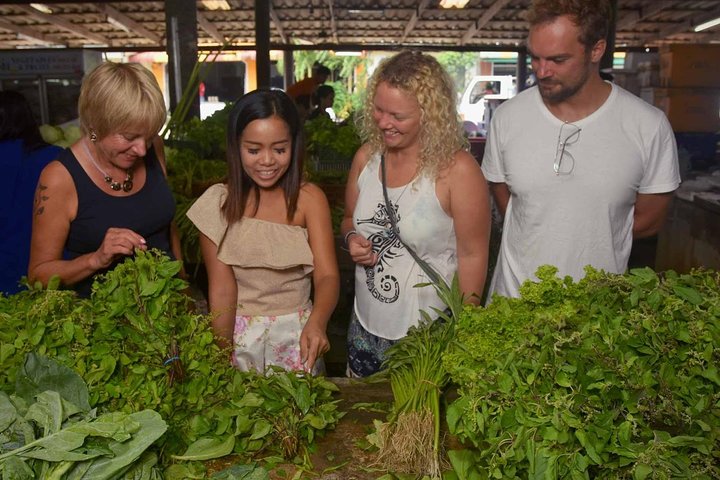
Cooking Class by Samui Native Instructor Geng and O Family
4 hours
From AUD 111.17
Doi Inthanon sits at 2,565 metres above Chiang Mai, and the cold surprises most visitors even in November. The upper trails push through moss-draped cloud forest where the light comes in soft and filtered, the undergrowth is perpetually damp, and you are working hard to separate movement from shadow. This is serious montane birding — rewarding, but not easy.
The star attractions are small and fast. Green-tailed Sunbird and Gould's Sunbird work the flowering shrubs along the summit loop road, and your best window is the first two hours after dawn before tour coaches arrive and the mist burns off. Rufous-vented Yuhina moves in chattering flocks through the mid-canopy, often mixed with warblers and fulvettas, so patience at a good vantage point pays better than chasing them.
Spot-breasted Parrotbill requires effort — the reed and bamboo edges near Kew Mae Pan Nature Trail are your most realistic location, and even there you may hear it far more than you see it.
Access is straightforward. Route 1009 winds all the way to the summit, and most birders drive or hire a songthaew from Chom Thong. The royal botanical gardens partway up offer good mid-elevation species and decent toilets, which matters after early starts. Accommodation ranges from basic bungalows within the park to guesthouses in Chom Thong town.
Local English-speaking guides are available through Chiang Mai birding operators and are genuinely worth the cost — the parrotbill alone justifies it.
Aim for November to February when resident Himalayan montane species are at their most active and migratory arrivals boost the overall count; bring a warm layer, rubber boots for wet trails, and insect repellent for the lower forest edges.