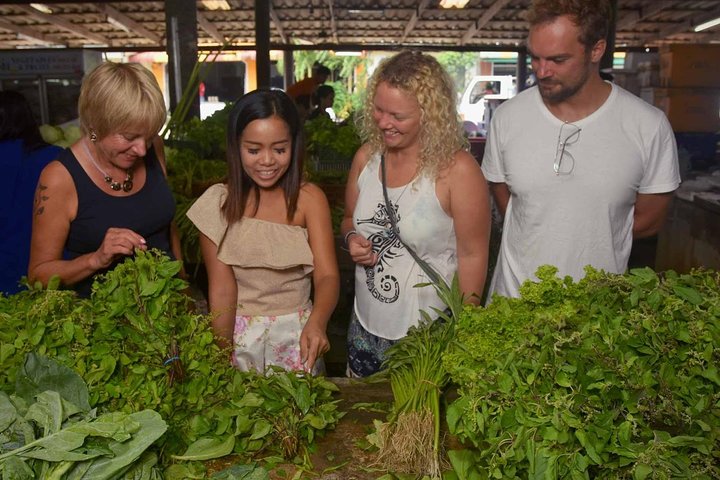
Cooking Class by Samui Native Instructor Geng and O Family
4 hours
From AUD 111.17
Phuket is Thailand's largest island and, depending on how you approach it, either a sprawling beach resort playground or a place with genuine depth and character. The two versions coexist, sometimes uncomfortably, but knowing which side to lean into makes all the difference.
Patong is what most people picture — loud, neon-lit, and relentlessly commercial. It has its place if you want nightlife and convenience, but Phuket Town, the island's historic capital in the east, is where things get genuinely interesting. The Sino-Portuguese shophouses along Thalang and Dibuk Roads are beautifully preserved, painted in faded pastels and housing excellent coffee shops, local restaurants, and small art galleries.
Grab a bowl of Hokkien-style noodles or try a mee krob at one of the old town's family-run cafes — the food here is distinctly different from what you'll find on the beach strips, shaped by the island's Chinese immigrant heritage.
The beaches vary enormously. Kata and Karon offer a calmer alternative to Patong's chaos, while the north-west coast around Nai Thon and Bang Tao feels quieter still. Promthep Cape in the south is worth timing for sunset, though you'll share the viewpoint with plenty of others.
If you want islands, longtail boats and speedboat tours run from multiple piers to Phi Phi and the Similan Islands, though both get crowded between November and April.
Getting around independently requires a rental scooter or hiring a driver — songthaews run fixed routes but aren't always convenient, and metered taxis are rare despite the airport connections. Grab works reasonably well in town and the beach areas.
The best time to visit is November through March, when skies are clear and seas are calm. Bring light clothing, reef shoes if you're snorkelling, and a healthy scepticism toward anyone on a beach promising a discounted boat trip.